Ever found yourself mid-keiko, heart pounding, gasping for air, feeling like your mind is racing ahead of your body? I’ve been there more times than I can count, and for ages, I thought pushing harder was the only answer.
But what if I told you the secret weapon isn’t just about raw power or precise technique, but something far more fundamental, something we do every single second without thinking?
Over the years, I’ve discovered that mastering Kendo isn’t just about striking a target; it’s deeply intertwined with the very breath you take, influencing everything from your stance to your mental clarity and even your ability to stay calm under pressure.
This isn’t some ancient, mystical secret; it’s a powerful, practical skill that modern science is increasingly validating for peak performance and overall well-being.
If you’re ready to transform your Kendo, both inside and out, let’s unlock these game-changing breathing techniques together.
Unlocking Your Inner Powerhouse: The Breath-Body Connection

When I first stepped onto the dojo floor, my focus was squarely on my kamae and hitting the target. Breathing? Honestly, it was an afterthought, something my body just *did*.
But as I advanced, I noticed something peculiar: the moments of my best performance weren’t just about technique; they were deeply tied to how I was breathing.
It was like an “aha!” moment, realizing that my breath wasn’t just fueling my body, it was orchestrating my entire physical presence. My sensei would often remind us that a strong *kiai* comes from the gut, not just the throat, and that deep abdominal breathing is the foundation.
This isn’t just about lung capacity; it’s about engaging your diaphragm, strengthening your core, and creating a stable center from which all your power emanates.
Think of it as your internal engine – a steady, powerful breath ensures that engine runs smoothly, even during the most intense *uchikomi*. I personally found that when I consciously started practicing diaphragmatic breathing even outside the dojo, my overall stability improved dramatically, making my movements feel more grounded and less frantic.
This foundational breathwork is truly the bedrock upon which all other Kendo skills are built, and neglecting it is like trying to build a skyscraper on quicksand, leaving your entire structure vulnerable.
It’s an investment in your entire physical and mental game.
The Diaphragmatic Difference
Many of us breathe shallowly, using only the upper chest. In Kendo, this is a recipe for quick fatigue and a lack of power. Diaphragmatic breathing, or “belly breathing,” changes everything.
It means drawing air deep into your lungs, causing your abdomen to expand, rather than just your chest. My first attempts felt awkward, almost unnatural, but with consistent practice, it became second nature.
I noticed my shoulders were less tense, my posture improved significantly, and crucially, my *kiai* gained a new depth and resonance. It’s not just a physiological change; it’s a profound psychological one too, grounding you and preparing your body for explosive action.
When you can consistently draw breath from your diaphragm, you’re not just getting more oxygen; you’re building a stronger, more intuitive connection between your mind and your core, which is a critical element in maintaining a solid kamae and delivering truly powerful strikes.
Building Core Stability Through Breath
A stable core is paramount in Kendo, influencing everything from your precise footwork to your confident sword handling. What’s often overlooked, however, is the profound role breathing plays here.
When you engage your diaphragm correctly, it works in tandem with your deep core muscles – your transversus abdominis and pelvic floor – creating a natural internal girdle that effectively supports your spine.
I remember struggling immensely with maintaining my balance during rapid movements and quick changes in direction, and it wasn’t until I truly focused on integrating my breath with core engagement that I saw a dramatic and lasting improvement.
It’s not about holding your breath; it’s about a controlled, powerful exhale that actively stabilizes your trunk for the split second of impact. This conscious activation allows for far greater force transmission from your legs through your core to your arms, ultimately leading to more effective, precise, and powerful techniques.
Beyond the Shinai: Cultivating Mental Fortitude Through Breath
Kendo is often called “moving Zen,” and for very good reason. It’s as much a mental battle as it is a physical one. I can’t tell you how many times I’ve felt my mind racing, analyzing every move, doubting my decisions, especially during *jigeiko* with a particularly skilled and aggressive opponent.
In those moments, my technique would invariably falter, my vision would narrow, and my reactions would slow to a crawl. It was a vicious, self-defeating cycle until I started to realize the incredible power of breathwork not just for physical stamina, but for achieving profound mental clarity and effective emotional regulation.
My sensei would often tell us, “Your breath is your anchor.” It sounds incredibly simple, but truly internalizing that concept transformed my entire approach to Kendo.
Instead of getting caught in a whirlwind of self-defeating thoughts, I learned to bring my awareness back to my breath, using it as a focal point to calm the internal chatter and regain my laser-like focus.
It’s like hitting a reset button for your brain, allowing you to react instinctively and powerfully rather than getting bogged down by overthinking every single move.
This profound connection between breath and mind is what truly separates the masters from the merely proficient, giving them an almost uncanny ability to stay centered amidst chaos.
Breathing for Focus and Presence
In the heat of a *keiko*, distractions are everywhere – the insistent clang of other *shinai*, the sweat stinging your eyes, the increasing fatigue in your muscles.
Yet, true Kendo requires absolute presence and unwavering concentration. I used to struggle immensely with staying in the moment, often finding my mind drifting to what happened a minute ago or what might happen next.
By consciously focusing on my breath – the simple, grounding sensation of air entering and leaving my body – I found a powerful and immediate tool to anchor myself firmly to the present.
This deliberate breath awareness isn’t about ignoring external stimuli; it’s about refining your internal control so that those stimuli don’t derail your concentration or your performance.
It’s a form of active, dynamic meditation that, when practiced consistently, allows you to maintain a sharp, clear mind throughout even the most physically and mentally demanding sessions, giving you an edge.
Emotional Regulation in High-Pressure Moments
Let’s be honest, Kendo can be incredibly frustrating at times. The feeling of missing a perfect opportunity, making a silly, unforced mistake, or getting hit unexpectedly can trigger a cascade of negative emotions – anger, disappointment, and self-doubt.
In the past, these emotions would hijack my performance, leading to more errors and a downward spiral. Learning to use my breath as a powerful tool for emotional regulation has been an absolute game-changer for me.
When I feel that familiar surge of frustration or irritation, instead of reacting impulsively, I take a deliberate, deep breath. This isn’t just a brief pause; it’s a physiological signal to my nervous system to shift from a fight-or-flight response to a more composed and rational state.
It allows me to process the emotion without letting it control my actions, enabling a quicker recovery and a more strategic, thoughtful approach to the next exchange.
This skill translates beautifully into everyday life, too.
Finding Your Rhythm: Synchronizing Movement and Respiration
For a long time, my Kendo felt choppy and disjointed. My footwork would often be out of sync with my swings, and my *kiai* would feel forced, almost like I was trying too hard to make it happen.
It was like listening to a band where the drums, guitar, and vocals were all playing at different tempos, creating a cacophony instead of harmony, lacking any real impact.
The breakthrough came when I started to consciously connect my breath to my movements. It’s not just about breathing *during* Kendo; it’s about breathing *with* Kendo, making them one continuous flow.
My sensei would emphasize that the breath initiates the movement, powers the strike, and concludes the action, all in one fluid, graceful sequence. When you truly master this, your Kendo transforms from a series of individual, somewhat disconnected actions into a seamless, flowing art, almost like a dynamic dance.
I remember one particular *keiko* where everything just clicked – my movements felt effortless, my *kiai* resonated with undeniable power and conviction, and I felt completely in tune with my body and my opponent.
It was an incredible sensation of being utterly in the “zone,” and it was entirely thanks to internalizing and synchronizing my breathing with my physical actions.
This integration creates a formidable force, both visually captivating and powerfully effective.
Breath as the Initiator of Movement
Think about a powerful *men* strike. It doesn’t just spontaneously start with lifting your *shinai*. It begins with an intention, which is then immediately supported and powered by your breath.
A deep inhale often precedes the raising of the *shinai* above your head, and then a strong, focused, and sustained exhale drives the strike downwards, accompanied by your *kiai*.
When these are out of sync, your movements inevitably become hesitant, rushed, or lack their full potential power. I’ve found that by practicing specific drills where I consciously initiate each movement – whether it’s a simple step, a complex cut, or even just a subtle shift in *kamae* – with a corresponding, deliberate breath, my overall efficiency and power improved dramatically.
It allows your body to prepare and commit fully to the action, avoiding wasted energy and any lingering hesitation, making your movements decisive.
The *Kiai* and Exhale Connection
The *kiai* is much more than a mere shout; it’s the outward manifestation of your spirit, your focus, and your raw power, intimately linked to your exhale.
A weak, strangled, or inconsistent *kiai* often indicates a weak, uncontrolled exhale, which in turn suggests a lack of proper core engagement and foundational breathing technique.
I used to think a louder *kiai* was always better, but then I learned it’s about the *quality* and *focus* of the sound, driven by a powerful, sustained exhale directly from the diaphragm.
When you truly drive your *kiai* from your core, it not only adds tangible power to your strike but also serves to empty your lungs efficiently, preparing you optimally for the next rapid inhale.
It’s a complete and continuous cycle: inhale to prepare, exhale to strike and *kiai*, then immediately ready for the next dynamic action. This rhythmic connection is what makes Kendo feel so utterly dynamic, powerful, and alive.
The Unseen Advantage: Mastering Oxygen for Endurance
Let’s be real, Kendo is incredibly physically demanding. Those long *keiko* sessions, the constant movement, the explosive bursts of energy required for a powerful *men* or *kote* strike, the constant shifts in balance – they can leave you utterly winded and questioning your overall fitness level.
For years, I attributed my fatigue solely to a perceived lack of physical conditioning. And while fitness is certainly a significant factor, I discovered that how effectively my body was utilizing oxygen played an even more critical role in my endurance and recovery.
It’s not just about breathing *more*; it’s about breathing *smarter*, making every inhale and exhale count for maximum efficiency. Efficient breathing ensures that your muscles get a steady, consistent supply of oxygen, delaying the onset of that dreaded lactic acid buildup and allowing you to maintain peak performance for significantly longer periods.
I’ve seen firsthand how practitioners who truly master their breath can sustain intense sparring rounds with seemingly less effort and far more composure than those who are constantly gasping for air and looking visibly desperate.
This subtle mastery truly gives you an unseen advantage, allowing you to maintain composure and execute clean, powerful techniques even when others are starting to flag and lose their sharpness.
Optimizing Oxygen Intake
It sounds incredibly obvious, but many Kendo practitioners aren’t maximizing their oxygen intake effectively. Shallow, rapid chest breathing leads to less efficient gas exchange in the lungs, leaving valuable oxygen unutilized.
Deep, controlled diaphragmatic breathing, on the other hand, allows for a greater volume of air to reach the lower lobes of the lungs where blood flow is richer, thus significantly enhancing oxygen absorption into the bloodstream.
I found that incorporating specific breath-hold exercises, like certain aspects of the Wim Hof Method (though adapted for Kendo, of course, focusing on controlled exhales and short holds before inhaling deeply), significantly improved my lung capacity and my body’s ability to utilize oxygen more efficiently under duress.
It’s about training your respiratory muscles and your lung capacity just like you tirelessly train your leg muscles for *fumikomi*. This isn’t just for marathon runners; it’s vital for the sustained bursts of energy and rapid recovery that Kendo constantly demands.
Delaying Muscle Fatigue
Lactic acid is the bane of any athlete’s existence; it’s that burning sensation that signals your muscles are tiring and losing power. Efficient oxygen delivery is your absolute best defense against its premature buildup.
When your body isn’t getting enough oxygen, it switches to anaerobic respiration, producing lactic acid more rapidly, leading to that heavy, fatigued feeling.
By consciously practicing deep, rhythmic breathing, I noticed a marked difference in how long I could maintain a high intensity without feeling completely spent or “hitting the wall.” My recovery time between intense exchanges also became noticeably quicker.
It’s about maintaining a steady, abundant supply of fuel to your hard-working muscles. When you’re consistently feeding your body with ample oxygen, you’re essentially extending your peak performance window, allowing you to execute techniques with power, precision, and unwavering focus even when your opponents are starting to flag and their movements become sluggish.
| Common Kendo Breathing Mistakes | Impact on Performance | How to Correct It (My Tips!) |
|---|---|---|
| Shallow Chest Breathing | Leads to quick fatigue, limited oxygen supply to muscles, tense shoulders, and a weak or strained *kiai*. You’ll feel out of breath much faster. | Practice diaphragmatic breathing daily. Lie down, place one hand on your belly, and focus intently on making it rise with each deep inhale. Gradually integrate this into your standing *kamae*. |
| Holding Breath During Action | Causes unnecessary muscle tension, slows reaction time, significantly reduces power, and inevitably leads to a desperate “gasping” inhale later. | Consciously connect a powerful, sustained exhale to your strike or movement. Think of the exhale as actively powering the technique, not just preceding it. Practice a consistent, strong *kiai* on your exhale. |
| Inconsistent or Irregular Breathing | Breaks your flow and rhythm, makes movements disjointed and less efficient, significantly impacts mental focus, and hinders your natural rhythm during *jigeiko*. | Focus intently on establishing a steady, rhythmic, and continuous breath even during light movement drills or basic *suburi*. Use a gentle metronome for consistency if needed. Breath should be a smooth, flowing cycle. |
| Weak or Suppressed *Kiai* | Indicates poor core engagement, a lack of clear intent, reduces psychological impact on your opponent, and significantly limits your strike power. | Practice projecting your *kiai* powerfully from your diaphragm, not just your throat. Ensure a full, strong, and confident exhale accompanies the sound. Visualize your energy extending with your voice. |
Calm Under Pressure: Breathing Your Way to Composure
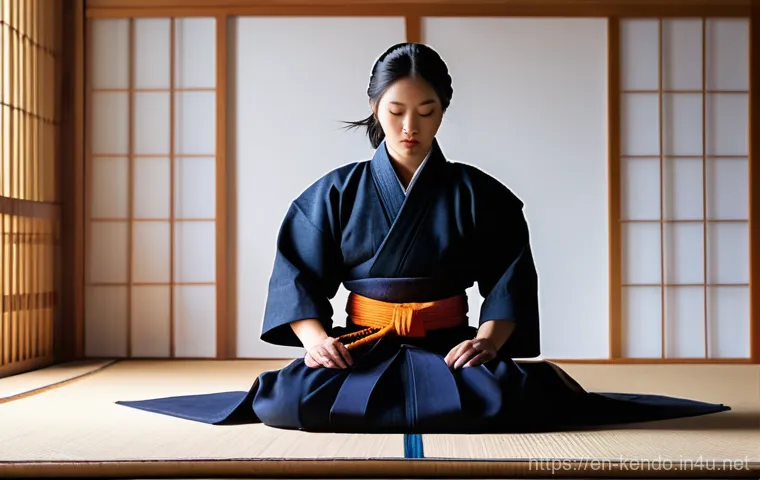
Kendo matches, especially in competition or grading exams, can be incredibly nerve-wracking. The anticipation, the scrutiny from judges or opponents, the intense desire to perform well and show your best – it all creates immense pressure that can easily overwhelm you.
I used to get so nervous before matches that my hands would literally shake, my heart would pound against my ribs, and my mind would go completely blank, forgetting all the training I’d done.
It felt like my body was working entirely against me. Over time, however, I learned that my breath was my most potent, readily available tool for managing that pre-match anxiety and staying composed in the thick of battle.
It’s not about eliminating nerves entirely – that’s probably an unrealistic goal – but about transforming that nervous, almost frantic energy into focused excitement and readiness.
My ability to consciously control my breath became synonymous with my ability to control my physiological response to stress, which is a powerful skill both inside and outside the dojo, impacting all areas of life and allowing for a level of resilience I never thought possible.
Pre-Match Nerves: A Breathwork Solution
Before a big match or important grading, my routine now always includes a few minutes of conscious, controlled breathing. I often use a simple box breathing technique: inhale deeply for four counts, hold for four, exhale slowly for four, and then hold again for four.
Repeating this cycle several times before I step onto the shiaijo significantly calms my nervous system. It perceptibly slows my heart rate, clears my mind of clutter, and helps me seamlessly transition from a state of anxious anticipation to one of focused readiness.
I remember one particular tournament where I felt overwhelming dread and self-doubt creeping in, but by taking a solid five minutes to just breathe and center myself, I was able to approach the match with a remarkably clear head and a sense of calm determination.
It’s a quick, effective, and free way to reclaim complete control of your internal state when it matters most.
Maintaining Equanimity During *Jigeiko*
Even during intense *jigeiko*, it’s incredibly easy to get flustered by a barrage of aggressive attacks or a particularly tricky and unpredictable opponent.
Losing your cool often leads to poor decisions, opening yourself up to strikes, and abandoning your carefully practiced technique. This is precisely where maintaining conscious breathwork becomes critically important.
When I feel myself getting overwhelmed or frustrated, I try to gently bring my awareness back to my breath, even for just a second or two. A deep, steady exhale can immediately signal to your brain that you’re in control and safe, helping to prevent that primal fight-or-flight response from taking over and sabotaging your performance.
It’s a subtle yet profound shift that allows you to observe, adapt, and react intelligently, rather than panicking or reacting impulsively. This practice of maintaining inner calm through purposeful breath is what truly elevates a good Kendo practitioner to a truly great one, allowing them to perform at their peak consistently.
Elevating Your Kendo: Practical Breathwork Drills
Knowing *about* breathing and its importance is one thing; actually *doing* it and effectively integrating it into your daily Kendo practice is another entirely.
For me, the real, tangible progress came when I started incorporating specific breathwork drills, both in and out of the dojo, making them a regular and non-negotiable part of my routine.
These weren’t complicated, mystical exercises that required hours of solitary contemplation; they were practical, actionable steps that reinforced proper breathing mechanics and gradually made them second nature, almost instinctive.
My sensei always stressed that repetition is key, not just for physical techniques like *men-uchi* but for mental and physiological ones too. By dedicating focused time to these specific drills, I noticed a tangible and significant improvement in almost every aspect of my Kendo – more power in my strikes, better stamina throughout longer *keiko* sessions, and a consistently calmer, more focused mind.
It’s about building muscle memory for your diaphragm and integrating breath into every fiber of your movement, making it an inseparable, foundational part of your Kendo spirit and overall performance.
Pre-Keiko Breath Activation
Before every *keiko* or important practice session, I now dedicate a few minutes to actively warming up and activating my breathing system. This might involve a series of deep diaphragmatic breaths, focusing intently on expanding my abdomen fully on the inhale and completely emptying my lungs on the exhale, perhaps even with a gentle squeeze of the core.
Sometimes I’ll add a slight pause at the end of the exhale to really feel my core engagement and ground myself. This not only prepares my body physically for the demanding session ahead but also helps to mentally transition into the focused dojo mindset, leaving external worries behind.
It’s like oiling the engine before you start the car – it ensures everything runs smoothly and efficiently from the very first *men* strike, making a noticeable difference in how quickly I can settle into the optimal rhythm of practice and perform at my best.
Integrated Movement and Breath Drills
One of the most effective drills I’ve found for true integration is to practice basic *suburi* (swings) with exaggerated, conscious breath control. For example, during a *men suburi*, consciously inhale as you gracefully raise the *shinai* above your head, and then perform a powerful, sustained exhale with a strong, focused *kiai* as you execute the strike.
Repeat this, focusing solely on the perfect synchronization of breath and movement, feeling the power originate from your core. Another excellent drill is practicing *ayumi-ashi* (walking step) or *okuri-ashi* (sliding step) while meticulously maintaining a consistent diaphragmatic breath, ensuring you never hold your breath or allow it to become shallow.
These drills effectively train your body to naturally link breath to action, making your Kendo more fluid, more powerful, and less taxing without having to consciously think about the mechanics during a heated exchange.
From Beginner to Black Belt: Breathing Habits for Every Stage
It’s easy to think that advanced breathing techniques are only for the experienced practitioners, those who have spent decades diligently perfecting their art.
But honestly, that’s a misconception I’ve had to overcome, and one I often see perpetuated amongst newer students. Just like learning basic footwork and posture, proper, foundational breathing should be introduced and emphasized right from day one of your Kendo journey.
In fact, establishing good breathing habits early on can prevent a lot of future struggles, inefficiencies, and frustrating plateaus in your Kendo development.
What I’ve seen time and again is that those who prioritize their breath from the very beginning develop a much stronger physical and mental foundation, allowing them to progress faster and with far fewer setbacks in their development.
It’s not just about what you achieve when you’re an advanced *sensei* demonstrating exquisite technique; it’s about building a robust, resilient framework that supports your entire Kendo journey, from your first hesitant *shinai* swing to your most confident and precise *ippon*.
This early investment in breath control truly pays off exponentially over the years, enhancing every aspect of your Kendo.
Beginner’s Focus: Awareness and Diaphragm
For beginners, the most crucial and often overlooked step is simply *awareness*. Many people aren’t even aware they’re predominantly chest breathing, which is inefficient.
Start by spending a few focused minutes each day, even just lying down comfortably, placing one hand on your chest and one on your belly, and consciously trying to make the hand on your belly rise more prominently with each inhale.
This simple yet profoundly effective exercise, which my first sensei rigorously emphasized, is absolutely foundational. Once you begin to get a genuine feel for diaphragmatic breathing, try to gradually integrate it into your basic *kamae* – standing tall, relaxing your shoulders, and allowing your breath to naturally deepen and settle into your abdomen.
Don’t worry about generating immense power yet; just focus intently on making it feel natural, consistent, and effortless. This initial, conscious focus will pay immense dividends down the line, building a solid respiratory base without any complicated or intimidating techniques.
Intermediate & Advanced: Refinement and Integration
As you progress through the ranks, the focus shifts from basic awareness to meticulous refinement and seamless, intuitive integration. For intermediate practitioners, it’s about linking breath more consciously and deliberately to specific techniques – honing your *kiai*, powering your *fumikomi*, and smoothing your transitions.
Experiment with how a sharp, explosive exhale can add significant power and snap to a strike, or how a controlled, steady breath can help you recover quickly after an intense, prolonged exchange.
For advanced practitioners, it becomes almost subconscious, an invisible force that guides every action. It’s less about *thinking* about breathing and more about breathing *as* the technique, where the breath becomes an invisible, yet absolutely fundamental, component of every single action and reaction.
This is where you really start to see the subtle nuances of breath control, using it for subtle shifts in timing, creating deceptive feints, and maintaining a constant, unyielding state of readiness.
It’s an ongoing process of discovery, continually refining this utterly essential skill throughout your entire Kendo life.
Closing Thoughts
So, as we wrap up this deep dive into the incredible power of breath in Kendo, I truly hope you’ve started to see that it’s far more than just a physiological function.
It’s the silent partner in every *men* strike, the steady hand in every moment of doubt, and the wellspring of true power and composure. My own journey in Kendo has been utterly transformed by consciously harnessing my breath, and I genuinely believe yours can be too.
It’s an ongoing practice, a lifelong commitment to refining not just your technique, but your inner strength and focus. Embrace it, experiment with it, and watch your Kendo – and indeed, your life – reach new heights.
Useful Tips for Your Kendo Journey
1. Make Diaphragmatic Breathing a Daily Habit: Spend at least 5-10 minutes every day consciously practicing deep belly breathing, even when you’re not in the dojo. Consistency is key to making it second nature, and you’ll find it helps with everything from stress reduction to better sleep.
2. Integrate Breath with Every Movement: From your most basic *suburi* to complex *waza*, consciously link your inhale and exhale to your physical actions. Feel your breath initiating, powering, and concluding each movement, making your Kendo feel more fluid and less disjointed.
3. Use Breath as Your Emotional Anchor: When nerves hit before a match or frustration creeps in during a tough *keiko*, take a deliberate moment to refocus on your breath. A few slow, deep exhales can reset your nervous system and bring you back to a state of calm, focused readiness.
4. Listen to Your Body’s Breath Cues: Pay attention to how your body breathes under different levels of intensity. Are you gasping for air? Feeling tense in your shoulders? These are signals to adjust your technique or focus on deeper, more controlled breathing to conserve energy and maintain composure.
5. Seek Guidance from Your Sensei: Don’t hesitate to ask your instructors for advice on breathwork. Many experienced Kenshi have profound insights into how breath supports Kendo, and they can offer personalized tips and drills that might be exactly what you need to break through a plateau.
Key Takeaways to Elevate Your Practice
Ultimately, mastering your breath in Kendo isn’t an optional extra; it’s a fundamental pillar for physical power, mental clarity, and enduring stamina.
It’s the invisible force that unlocks deeper focus, enhances emotional resilience, and seamlessly synchronizes your body and mind, allowing you to move with greater purpose and unleash your full potential, both on and off the dojo floor.
By dedicating time to this often-overlooked aspect, you’re not just improving your Kendo; you’re cultivating a deeper connection to your own inner powerhouse, ready to face any challenge with unwavering spirit.
Frequently Asked Questions (FAQ) 📖
Q: Why is something as simple as breathing so crucial for mastering Kendo, beyond just keeping me from getting winded during a tough keiko?
A: Oh, I totally get why you’d ask that! For the longest time, I just thought breathing was about not collapsing mid-strike. But believe me, it’s a total game-changer, and it goes so much deeper than preventing fatigue.
Think about it: your breath is the ultimate connector between your mind and body. When you’re in the heat of a Kendo match, your breath directly influences your mental clarity – a steady breath calms the internal chatter and sharpens your focus, helping you anticipate your opponent’s movements and react instinctively.
I’ve found that when my breath is controlled, my stance feels more grounded, my movements become more fluid, and my kiai (that powerful shout!) comes from a deeper place, projecting genuine intent.
It even helps you manage pressure! There have been so many times I’ve felt overwhelmed, only to bring my attention back to my breath and suddenly, things snap into perspective.
It’s not just about getting oxygen; it’s about controlling your internal state, which then translates directly into stronger, smarter, and more confident Kendo.
It’s like unlocking a secret cheat code for your entire physical and mental game!
Q: Are these breathing techniques specifically designed for Kendo, or can they benefit me in other areas of my life too?
A: That’s an excellent question, and it really highlights the universal power of these practices! While we’re talking about how they supercharge your Kendo, the fantastic news is that these aren’t just Kendo-specific hacks.
Far from it! The very principles of mindful and controlled breathing, which we adapt for the dynamic environment of keiko, are rooted in practices that have been shown by modern science to enhance performance and well-being across the board.
I’ve personally found them incredibly helpful outside the dojo. Whether I’m tackling a stressful work deadline, trying to stay calm in heavy traffic, or even just needing a boost of focus before a big presentation, applying these techniques works wonders.
They’re essentially tools for regulating your nervous system, improving your concentration, and reducing stress, which are pretty much superpowers for anything life throws at you.
So yes, absolutely! Learn them for Kendo, but expect them to spill over and make a positive impact on your entire life. It’s truly a holistic approach!
Q: How long does it usually take to feel a noticeable improvement in my Kendo by practicing these breathing techniques?
A: This is one of the most common questions I get, and for good reason – we all love to see progress, right? From my own journey and watching countless fellow practitioners, I can tell you that you might start feeling something almost immediately, even after your very first dedicated session.
That initial “aha!” moment where you feel a bit more centered or your kiai feels stronger? That can happen surprisingly fast. However, for those truly profound, game-changing shifts in your Kendo – like improved endurance, better mental clarity under pressure, or a consistently more powerful presence – you’re looking at a more gradual process.
Think of it like building muscle: you feel the burn on day one, but significant strength gains come with consistent effort over weeks and months. I’d say with regular, mindful practice – even just 10-15 minutes a day focused purely on breathing exercises, plus consciously applying them in keiko – you could start noticing distinct improvements in your overall Kendo performance and mental state within a few weeks to a couple of months.
The key is consistency and patience. Keep at it, and you’ll be amazed at how foundational your breath becomes to your entire Kendo practice!