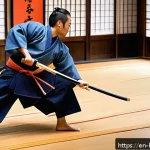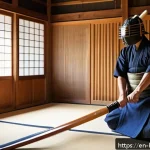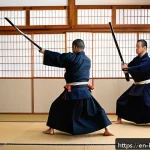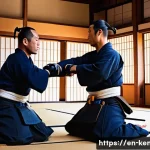
Hey Kendo family! You know, we talk a lot about powerful strikes and unwavering spirit, but I’ve personally found that the true magic in Kendo, the kind that makes your opponents hesitate and opens up those perfect opportunities, often begins and ends with your feet.
I remember hitting a plateau, feeling like my movements were just a step behind, until I really dug deep into advanced footwork. It’s not just about sliding anymore; modern insights and dedicated practice on things like dynamic footwork drills can truly revolutionize your Ashi-sabaki, giving you that explosive speed and effortless precision we all strive for.
If you’re ready to transform your entire presence on the dojo floor and take your Kendo to an undeniably higher level, then focusing on these refined footwork techniques is your ultimate game-changer.
Let’s find out exactly how to achieve that.
The Foundation of Fury: Mastering Dynamic Ashi-Sabaki

The Explosive First Step: Unlocking Instant Acceleration
Why Precision Trumps Power Every Single Time
You know, for the longest time, I thought Kendo was all about swinging harder, striking faster. But I hit a wall, a real mental and physical block, where my powerful strikes just weren’t landing.
It felt like I was always a hair too slow, a fraction of a second behind. That’s when I truly started to dig into what my sensei always subtly hinted at: the feet.
It’s not about brute force, but about the intelligent, almost imperceptible shifts that create openings and close distances. I remember practicing my *okuri-ashi* for hours, thinking I had it down, but then realizing that true *dynamic* footwork isn’t just sliding; it’s about that explosive first step that changes everything, the ability to generate immense power from a seemingly small movement.
It’s the silent declaration of intent that your opponent reads, even before you raise your *shinai*. This mastery of initial acceleration and deceleration, often overlooked in favor of flashier techniques, is what truly sets apart a good *kendoka* from a great one.
It’s a feeling of being perfectly centered, yet capable of launching yourself into an attack or retreating defensively in an instant, a fluidity that almost defies gravity.
Beyond Basic Slides: The Art of Subtle Maneuvers
Reading the Opponent: Anticipation Through Foot Placement
Deception and Feints: Using Your Feet to Create Openings
We’ve all been there, right? Staring across at an opponent, trying to guess their next move. But what if your feet could do more than just carry you?
What if they could *speak*? I found my Kendo truly transformed when I started thinking about my footwork not just as movement, but as a form of communication, a subtle language that can mislead and deceive.
It’s about those tiny, almost imperceptible shifts, a slight weighting on one foot or a momentary hesitation that plants a seed of doubt in your opponent’s mind.
I used to be so focused on my *shinai*, but my sensei pointed out that my *ashi-sabaki* was betraying my intentions. Learning to fake a movement, to initiate a step in one direction only to explode in another, felt like unlocking a secret cheat code.
It’s a dance of anticipation, where you’re not just reacting, but actively guiding your opponent into a position where you can strike. This isn’t about being flashy; it’s about being smart, leveraging minimal effort for maximum impact, making your opponent second-guess every single one of their own movements.
The Rhythmic Connection: Synchronizing Body and Blade
Finding Your Personal Kendo Tempo and Flow
The Unbreakable Link: Footwork Dictating Strike Quality
There’s a beautiful, almost musical quality to high-level Kendo, a rhythm that becomes palpable on the dojo floor. For years, my footwork and my strikes felt disconnected, like two separate entities.
My feet would move, and then my *shinai* would follow, often a beat too late. It wasn’t until I truly embraced the idea of *unison* that things clicked.
I remember a particularly frustrating practice where nothing was landing, and my sensei just told me to focus on my breath and my feet, and let the *shinai* be an extension of that.
Suddenly, it wasn’t about *making* a strike; it was about the strike *emerging* naturally from the fluid motion of my body, initiated by my feet. It’s a powerful feeling when your *fumikomi* doesn’t just happen, but feels like an inevitable conclusion to your preparatory steps, a physical manifestation of your mental intent.
When your footwork and your blade sing in harmony, your strikes become not just faster, but incredibly more penetrating and decisive. It’s a total body experience, where every part works together to achieve that perfect, crisp *datotsu*.
Drills That Define: Revolutionizing Your Kendo Presence
Solo Footwork Drills for Unmatched Agility
Partner Drills: Building Responsive and Adaptive Movement

Honestly, if someone told me I’d spend so much time just moving my feet without a *shinai* in hand, I might have laughed. But I’ve personally found that the real magic happens in those dedicated footwork sessions.
Beyond the standard *kirikaeshi* and *uchikomi*, I started incorporating advanced solo drills focused purely on agility and explosive power. Think about short, rapid *okuri-ashi* bursts, lateral shuffles, and even backward steps that aren’t just for retreating but for setting up counter-attacks.
I remember feeling so clumsy at first, but sticking with it paid off massively. Then, bringing those solo gains into partner drills felt like putting all the pieces together.
It’s not just about hitting targets; it’s about constantly adjusting, anticipating, and reacting to your partner’s movements. Drills like *Kakari-geiko* become entirely different when you’re consciously focusing on disrupting your opponent’s rhythm with your footwork, rather than just enduring the attack.
It transforms your entire presence on the floor, giving you a confidence that radiates outwards, making your opponents hesitate and second-guess.
| Footwork Type | Key Benefit | Common Mistake | Advanced Focus |
|---|---|---|---|
| Okuri-ashi (Forward/Backward) | Smooth, continuous motion, quick distance closing/opening | Dragging back foot, losing balance | Explosive push-off, seamless transition into fumikomi |
| Ayumi-ashi (Walking Step) | Versatility, stealth, setting up angles | Uncontrolled steps, telegraphing intent | Subtle weight shifts, deceptive pacing |
| Hiraki-ashi (Opening Step) | Evasion, creating counter opportunities | Over-rotation, exposing back | Minimal movement for maximum evasion, instant recovery |
| Tsugi-ashi (Following Step) | Closing small gaps quickly, maintaining pressure | Hesitation between steps, uneven rhythm | Seamless combination with Okuri-ashi, dynamic acceleration |
The Silent Strategy: Using Footwork to Control the Maai
Manipulating Distance: Your Feet as Tactical Tools
Maintaining Superiority: Always a Step Ahead
One of the biggest “aha!” moments I had in Kendo was realizing that my *maai*, that critical distance between myself and my opponent, wasn’t just a fixed space; it was a dynamic, living entity that I could control with my feet.
Before, I was often reacting to my opponent’s entry into my *maai*. Now, I’ve learned to actively manipulate it, using subtle *ashi-sabaki* to invite an attack, or to create an impossible distance for them to bridge effectively.
I remember a specific practice where I felt like I was constantly just a little bit out of reach, not because I was retreating, but because my footwork was so precise in maintaining that perfect *issoku itto no maai*.
It’s a game of inches, or even millimeters, where a slight adjustment of your heel or the subtle shift of your weight can make all the difference. This isn’t about running away; it’s about always being in the optimal position to strike, or to defend, ensuring that your opponent is always playing catch-up, always slightly off-balance.
It’s truly empowering when you realize your feet are your primary tool for strategic advantage on the dojo floor.
Kendo’s Emotional Core: Confidence from Solid Ground
Building Unshakeable Confidence Through Foundational Footwork
The Mental Edge: How Footwork Impacts Your Inner Game
Let’s be real, Kendo isn’t just physical; it’s intensely mental. And for me, a huge part of my mental game, my confidence, stems directly from how stable and agile I feel on my feet.
There were times when my footwork felt shaky, uncertain, and that uncertainty absolutely bled into my strikes and my overall presence. I felt hesitant, my *kiai* felt weak, and my whole posture seemed to shrink.
But as I dedicated myself to refining my *ashi-sabaki*, to feeling truly grounded and explosive at the same time, I noticed a profound shift in my confidence.
It’s like building a house – a strong foundation means the whole structure can withstand any storm. When I know my feet are strong, precise, and ready for anything, I step onto the dojo floor with an entirely different kind of energy.
My *kiai* is stronger, my eyes are more focused, and I’m far less likely to succumb to pre-match jitters. This isn’t just about winning points; it’s about finding that inner calm and assertive presence that makes Kendo such a transformative art.
It’s the feeling of knowing you’re ready for anything, and that alone can make all the difference.
글을 마치며
Kendo, for me, has truly been a journey of self-discovery, and I hope this dive into the nuances of Ashi-Sabaki has resonated with you as much as it has transformed my own practice. It’s easy to get caught up in the flash of a powerful strike, but the real, enduring strength, the kind that lets you truly express your Kendo, comes from the ground up, from the silent, tireless work of your feet. This isn’t just about moving; it’s about connecting with the very essence of the art, finding that perfect harmony between body, mind, and spirit. Keep practicing, keep feeling, and trust that every deliberate step is building a stronger, more confident you.
알아두면 쓸모 있는 정보
1. Embrace the Mirror, Embrace the Feedback: I can’t stress this enough – practicing your basic footwork drills like Okuri-ashi and Ayumi-ashi in front of a mirror, or even better, recording yourself, can be an absolute game-changer. What you feel you’re doing might not be what you’re actually doing. I used to think my back foot was staying grounded, but a quick video review showed me it was dragging just a hair, which subtly threw off my balance and power. Honest self-assessment is crucial, and it’s a habit that will accelerate your learning in ways you can’t imagine.
2. Beyond the Dojo: Footwork Everywhere: Your Kendo footwork doesn’t have to be confined to the dojo. I often find myself subtly practicing my balance and weight shifts while waiting in line, or even just walking. Thinking about my posture, the connection of my feet to the ground, and making micro-adjustments helps to build muscle memory and awareness outside of formal practice. It sounds a little obsessive, perhaps, but those small moments add up and truly integrate the principles of good Ashi-Sabaki into your everyday movement, making your Kendo feel more natural and intuitive when it truly matters.
3. The Unsung Heroes: Your Ankles and Calves: We often focus on the big muscle groups, but for dynamic Ashi-Sabaki, the strength and flexibility of your ankles and calves are paramount. I learned this the hard way after experiencing some minor strains. Incorporating specific ankle strengthening exercises – think calf raises, ankle rotations, and even balancing on one foot – into your routine can drastically improve your stability, quickness, and endurance. It’s not just about pushing off; it’s about having a solid, responsive foundation that can absorb and redirect force efficiently, protecting you from injury while enhancing your performance.
4. Patience, Persistence, and Plateaus: Kendo, like any martial art, has its plateaus. There will be days, weeks, even months, where it feels like your footwork isn’t improving, or worse, is regressing. I’ve been there, staring at my feet, wondering if I’d ever truly “get it.” This is where patience and persistence become your greatest assets. Trust the process, continue with your drills, and don’t be afraid to ask your Sensei for specific feedback. Sometimes a tiny adjustment, a different way of thinking about a movement, or a renewed focus can break through that wall. Remember, every master was once a beginner, and consistent effort, even through frustration, always yields results.
5. The Mental Game: Visualizing Perfect Footwork: Don’t underestimate the power of mental practice. Even when you’re not on the dojo floor, take a few minutes to visualize yourself executing perfect Ashi-Sabaki. See yourself moving smoothly, explosively, with impeccable balance and precise timing. Imagine the feeling of your feet driving you forward, the crispness of your fumikomi, and the effortless transition into your next movement. This mental rehearsal, a technique I picked up from a senior kendoka, helps to reinforce neural pathways and strengthens your understanding of the movements, making your physical practice more effective and efficient when you return to the dojo.
중요 사항 정리
Ultimately, mastering dynamic Ashi-Sabaki is about understanding that your feet are the engine of your Kendo. It’s not just about speed, but about intelligent movement, precise control of distance, and building an unshakeable confidence from the ground up. By embracing disciplined practice, focusing on the subtle mechanics, and integrating footwork into every aspect of your training, you unlock a deeper, more powerful expression of your Kendo. Your feet don’t just move you; they communicate, they strategize, and they lay the foundation for every impactful strike.
Frequently Asked Questions (FAQ) 📖
Q: What are some specific advanced footwork drills that truly made a difference in your Kendo journey?
A: Oh, this is such a great question! You know, for a long time, I just thought Kendo footwork was about getting faster at okuri-ashi. And don’t get me wrong, that’s foundational.
But the real game-changer for me came when I started focusing on drills that demanded more dynamic control and immediate responsiveness. One drill I swear by is the “Zigzag Ashi-sabaki.” Instead of just moving forward and back, you set up a few markers – maybe three or four – in a zigzag pattern, about two swords’ length apart.
You practice okuri-ashi to each marker, but the key is the instant change of direction and the absolute silence of your feet. You’re not just shuffling; you’re exploding into the next direction with minimal wasted movement.
It forces you to engage your core and truly feel the ground beneath you. Another one that transformed my defense and counter-attacks is what I call “Micro-adjustments in Place.” Stand with your kamae and have a partner randomly call out “forward,” “back,” “left,” or “right,” but with tiny increments.
You’re not moving across the floor, but rather making those almost imperceptible shifts that keep you perfectly balanced and ready to strike, or evade.
I found this built incredible sensitivity and allowed me to maintain pressure even when an opponent was trying to disrupt my space. These aren’t just speed drills; they build intelligent, adaptable footwork.
Q: How can I tell if my current footwork is holding me back, and what’s the immediate benefit I’ll notice from refining it?
A: That “aha!” moment when you realize your footwork is the bottleneck is actually a blessing in disguise, because once you pinpoint it, you can fix it. For me, the biggest red flags were hesitation and feeling “stuck.” If you find yourself frequently lunging off-balance, struggling to recover quickly after a strike, or feeling like your body isn’t quite catching up to your mind’s intention, your footwork is likely the culprit.
Another tell-tale sign is if your kiai feels powerful but your datotsu lacks that crisp, penetrating quality. It’s often because your feet aren’t supporting the full force of your body.
The immediate benefit, though? Oh, it’s transformative! The first thing you’ll feel is a profound sense of stability.
Suddenly, your kamae feels more rooted, and you can generate power from the ground up without conscious effort. Then comes the speed – not just raw speed, but efficient speed.
You’ll move faster with less energy, almost gliding, and those split-second opportunities will appear because you’re already in position. I remember the sheer joy of realizing I could effortlessly adjust my distance just enough to land a clean men strike, or pivot out of danger with a fluidity I hadn’t felt before.
It’s like unlocking a new level of freedom and control in your movement.
Q: Beyond just drills, what’s the best way to consistently practice and integrate these advanced footwork techniques into my daily Kendo training?
A: This is where the real magic happens, my friend. Drills are essential, but true integration comes from making it a subconscious part of your Kendo. I always recommend starting with a dedicated warm-up routine that specifically focuses on footwork fluidity and awareness, before you even pick up your shinai.
Think light, rhythmic steps, visualizing different scenarios, and really feeling the connection between your feet and the floor. During kihon, don’t just go through the motions.
Consciously think about your foot placement, the push-off, and the landing for every single strike. Are your heels lifting at the right time? Is your front foot landing silently?
Is your back foot driving you forward efficiently? I found that slowing down kihon initially and over-emphasizing perfect footwork for each technique made a huge difference.
Then, when it comes to jigeiko, this is where you test it. Don’t be afraid to dedicate entire rounds to only focusing on your footwork. Forget about winning the point for a moment.
Try to move with deliberate intention, maintaining your ideal distance, and practicing those micro-adjustments. Actively observe your opponent’s footwork too; it’s an incredible learning tool.
And honestly, simply walking around in your daily life with an awareness of your posture and how you push off the ground can even subtly reinforce good habits.
It sounds a bit extreme, but when you truly commit to making footwork an ingrained habit, it permeates every aspect of your Kendo, making you a much more dangerous and graceful practitioner.
Consistency and mindful repetition are your best friends here!